
Nonogram
A nonogram is a logic puzzle in which a picture is revealed by filling in cells on a grid according to numerical clues. The numbers beside each row and column represent the lengths of consecutive filled blocks, and when multiple numbers appear, they must be separated by at least one empty cell. All solutions are reached through logical deduction rather than guessing.
As the difficulty increases, the grids become larger and the clues more complex, making each decision more impactful. Advanced nonograms require solvers to infer the overall structure from limited information, demanding a high level of concentration and systematic reasoning.
From a cognitive perspective, nonograms are also considered beneficial as a form of mental exercise. The repeated process of analyzing rows and columns simultaneously encourages logical thinking, pattern recognition, and sustained attention, which can contribute to overall cognitive engagement.
Challenging Logic Puzzle Collection Deluxe


Since I was in middle school, after my math teacher introduced me to nonograms, they have become one of my favorite logic puzzles, and I have continued to enjoy them ever since. Having solved them consistently for many years, I now find it difficult to feel much interest in relatively simple puzzles, and I naturally tend to choose and enjoy puzzles designed for advanced solvers.
While looking for a nonogram puzzle book in Japan that offers a suitable level of difficulty for advanced players, I came across “Challenging Logic Puzzle Collection Deluxe.” As expected of an advanced-level puzzle book, the puzzles are challenging and take a considerable amount of time to solve, but because of their large size, the completed images are highly satisfying and provide a strong sense of accomplishment. In addition, the price is around 1,000 yen, making it affordable, and the large number of puzzles included also contributes to its excellent value for money.
Table of Contents
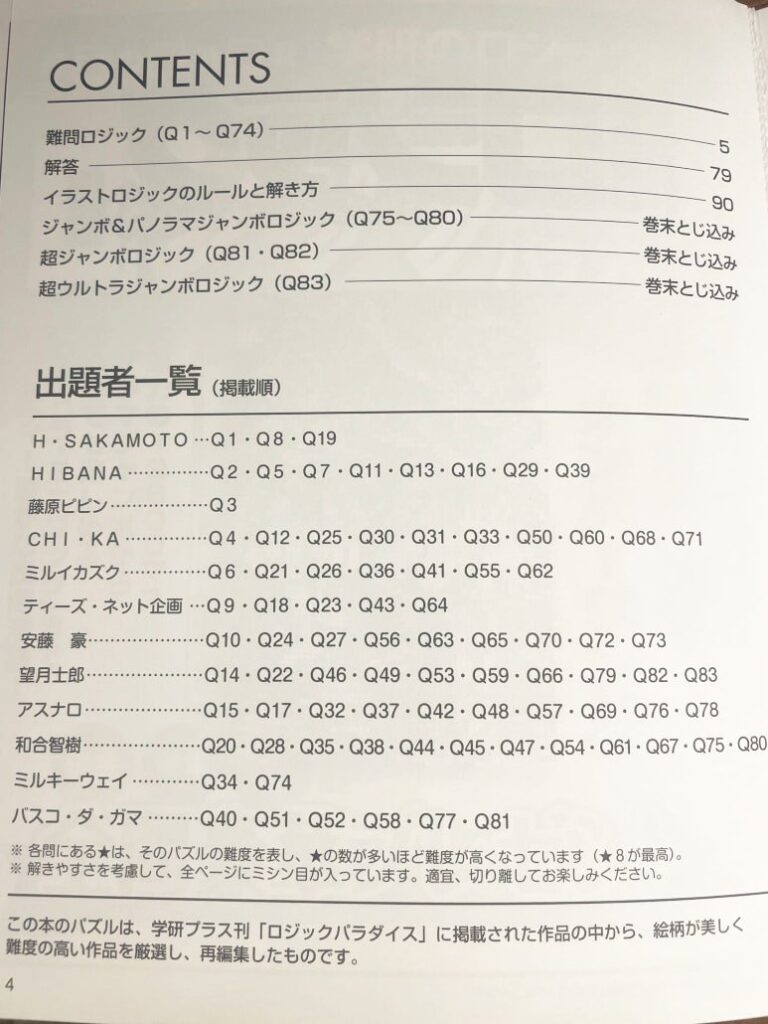
Challenging Logic Puzzle Collection Deluxe contains approximately 74 puzzles of various sizes, along with about nine extra-large puzzles. At the end of the book, the solutions to the puzzles as well as explanations of how to solve them are included, making it a helpful reference even though it is designed for advanced solvers.
One distinctive feature of this book is that it is a re-edited collection of high-quality puzzles selected from works originally published on a platform called Logic Paradise. Each puzzle includes the name of its creator, which makes the book particularly interesting, as it feels closer to a curated collection of works rather than a simple puzzle book.
Puzzle Difficulty
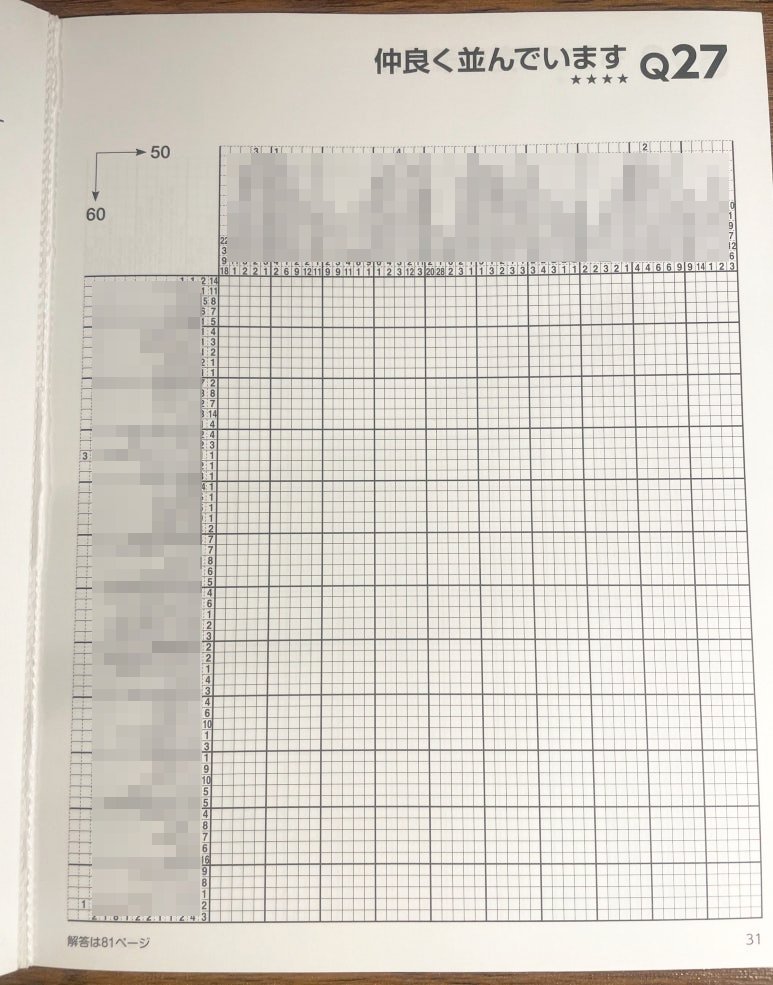
In this puzzle book, the easiest puzzles start at a grid size of 40×45, while the largest puzzles go up to 60×80. In the case of the extra-large puzzles, they are too big to fit on a single page, so they are included in the back of the book with the paper folded.
One of the points I liked most is that the pages are perforated, allowing each puzzle to be torn out and enjoyed separately. Large puzzles can be difficult to solve while keeping the book open, so being able to neatly tear out only the necessary pages makes the solving experience much more convenient.
Puzzle Solutions
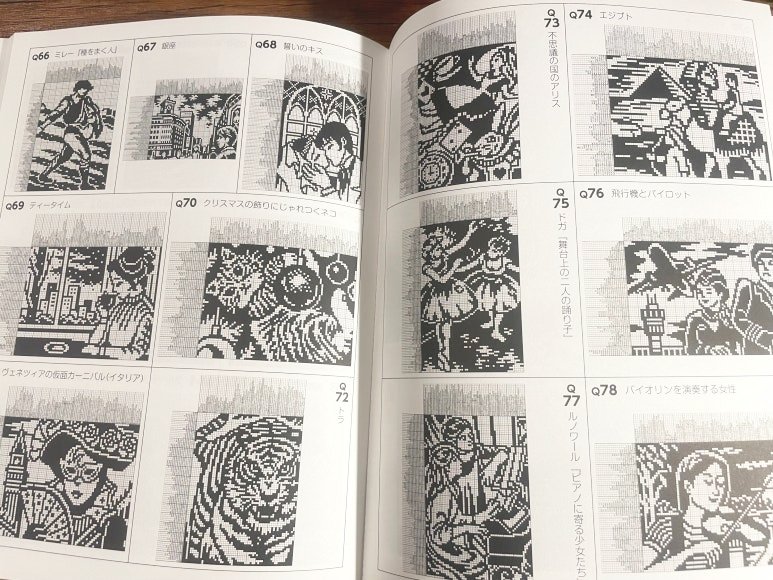
In the solution section, the completed images for each puzzle are included, which is very helpful to refer to when progress slows or when it becomes difficult to continue solving a puzzle.
However, one minor drawback is that because the puzzles themselves are quite large, the solution images are relatively small, which can make it difficult to check fine details.
Super Ultra Jumbo Logic
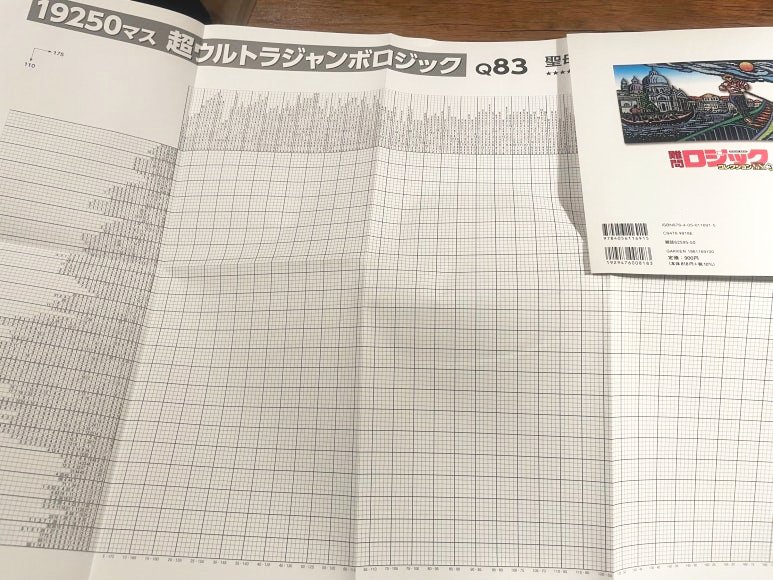
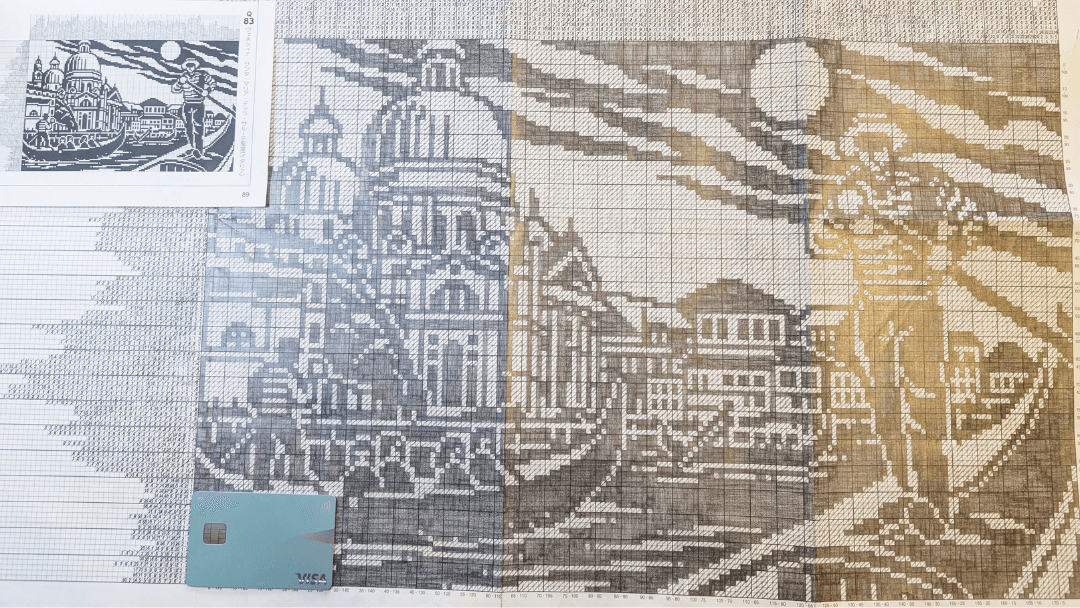
The highlight of Challenging Logic Collection Deluxe is the Super Ultra Jumbo Logic. The puzzle measures 175×110 cells, and considering that the puzzle book itself is roughly A4 size, it gives a clear sense of just how large the puzzle really is.
This puzzle is not only large in size but also extremely challenging, requiring a high level of logical thinking and concentration. Because mistakes made along the way are difficult to correct later, accuracy is far more important than speed when solving this puzzle.
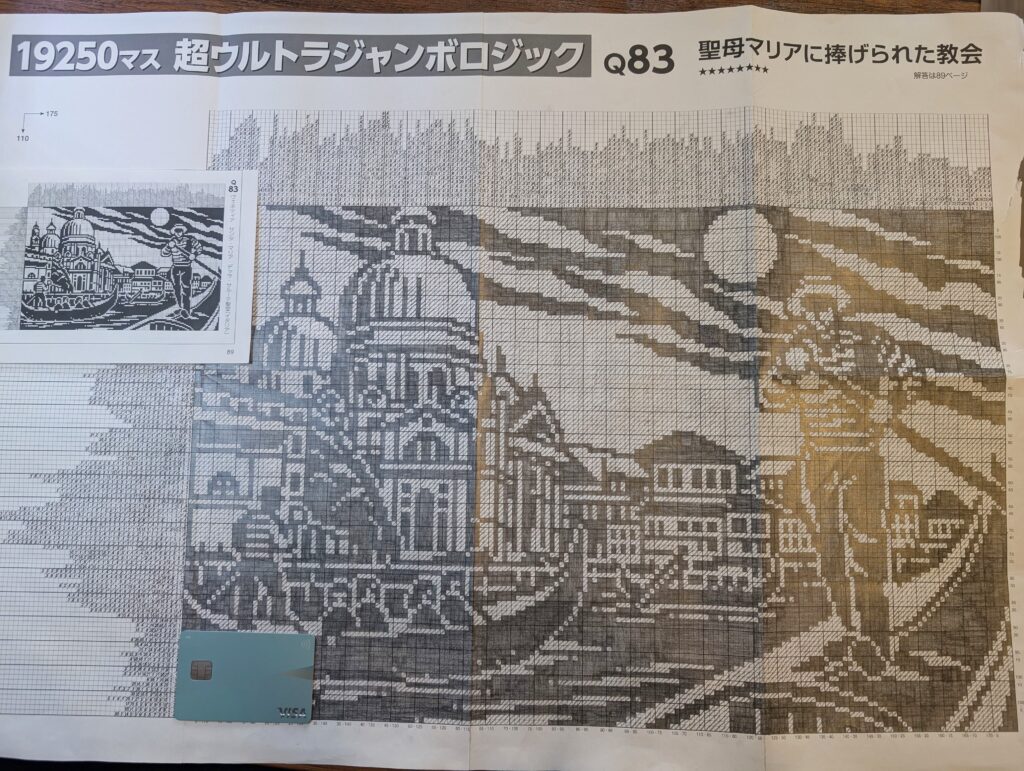
This is the completed Super Ultra Jumbo Logic puzzle. I worked on it little by little whenever I had time, and it took me about a month to finish. A card is placed in the lower left corner for size comparison, which helps give a clearer sense of how large the puzzle is. Because of its size, it takes a considerable amount of time to complete, but the large scale also results in a highly detailed image, making the sense of accomplishment and satisfaction after completion especially strong. I also felt that it has more than enough value as a collectible piece.
Challenging Logic Collection Deluxe is a brain-training puzzle book that I would particularly recommend to those who have already mastered smaller nonogram puzzles, as well as to anyone who wants to further develop their logical thinking and concentration.
– Recommended Reading –


Amazon Japan Challenging Logic Collection Deluxe
Comments