
What Is Gunpla?
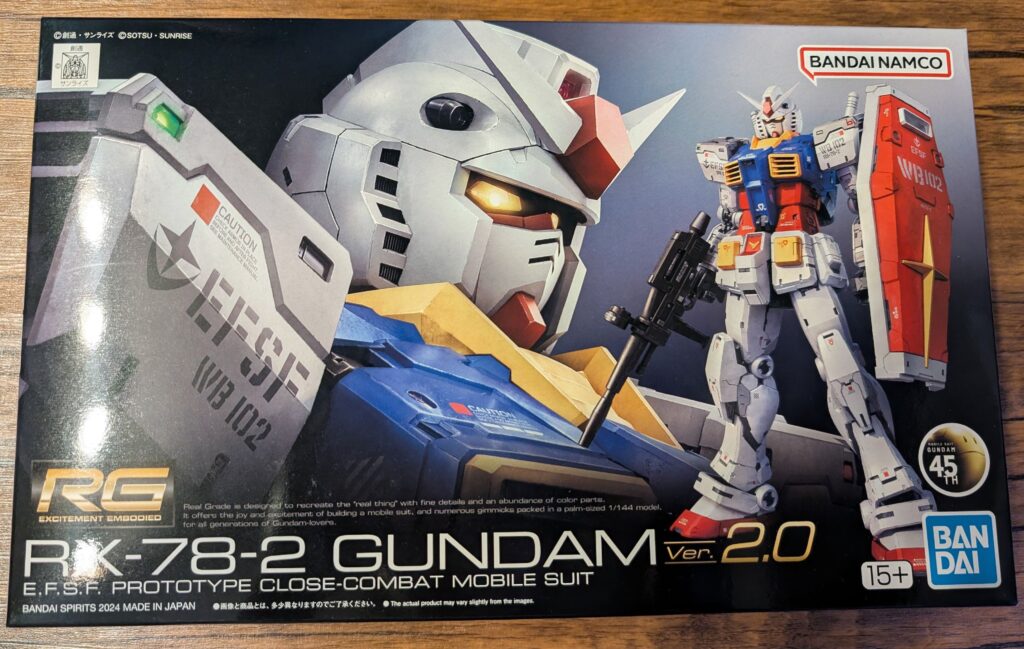
Gunpla is a shortened term for “Gundam Plastic Model” and refers to plastic model kits that recreate the robots appearing in the Japanese anime series “Mobile Suit Gundam.” These model kits have been consistently released by Bandai for many years and have grown beyond simple toys into a hobby recognized worldwide for its high level of structural detail and design quality. Above all, the greatest appeal of Gunpla lies in the ability to build your own unique model with your own hands.
Gunpla is especially popular as a kidult hobby, as it can be enjoyed regardless of age. The process of calmly assembling the parts while following the instruction manual helps relieve everyday stress, and seeing the completed Gundam brings a strong sense of accomplishment. With a wide range of grades designed for different skill levels, even beginners can start building Gunpla without feeling overwhelmed.
Gunpla Grades
Gunpla comes in several different grades, which are classified based on size, part composition, and assembly difficulty. Each grade differs in final size, level of detail, and building process, allowing builders to choose according to their preferences and experience level. For those who are new to Gunpla, simply understanding the basic characteristics of each grade can make getting started much easier.
●HG (High Grade) ★☆☆☆
・1/144 scale of the original, price around ~¥3,000
HG is the most common and widely available grade, making it easy to find both in stores and online. With relatively few parts, the assembly time is short and the price is affordable, making it suitable for beginners and first-time builders. However, personally, I find the finished appearance to be somewhat simple, so HG is not a grade I tend to choose.
●RG (Real Grade) ★★☆☆
・1/144 scale of the original, price around ~¥5,000
RG shares the same scale as HG but features a much higher number of parts and a more intricate internal structure. Its wide range of articulation allows for highly dynamic posing, although the small size and numerous parts make the assembly more challenging than it may first appear. That said, when considering price, size, posing flexibility, and overall building enjoyment, RG is the grade I would most recommend to beginner kidults.
●MG (Master Grade) ★★★☆
・1/100 scale of the original, price around ~¥10,000
Released to commemorate the 15th anniversary of Gunpla, MG offers a size that truly captures the appeal of Gunpla, moving beyond the toy-like feel of 1/144 scale kits. Due to its larger size, MG kits have many parts and require a longer assembly time, and while various poses are possible, the weight can slightly limit articulation. Display space should be considered after completion, but this is personally my favorite grade.
●PG (Perfect Grade) ★★★★
・1/60 scale of the original, price around ~¥30,000
PG is the highest grade in the Gunpla lineup. Released to celebrate the 20th anniversary of Gunpla, some kits include advanced features such as LED lighting. Although I have not built one myself yet, it is a grade well worth trying at least once for dedicated Gunpla enthusiasts.
In addition to these, there are various other grades such as SD, EG, and FM. However, this post focuses on the representative grades that beginners are most likely to encounter when starting Gunpla.
RG Gunpla Components
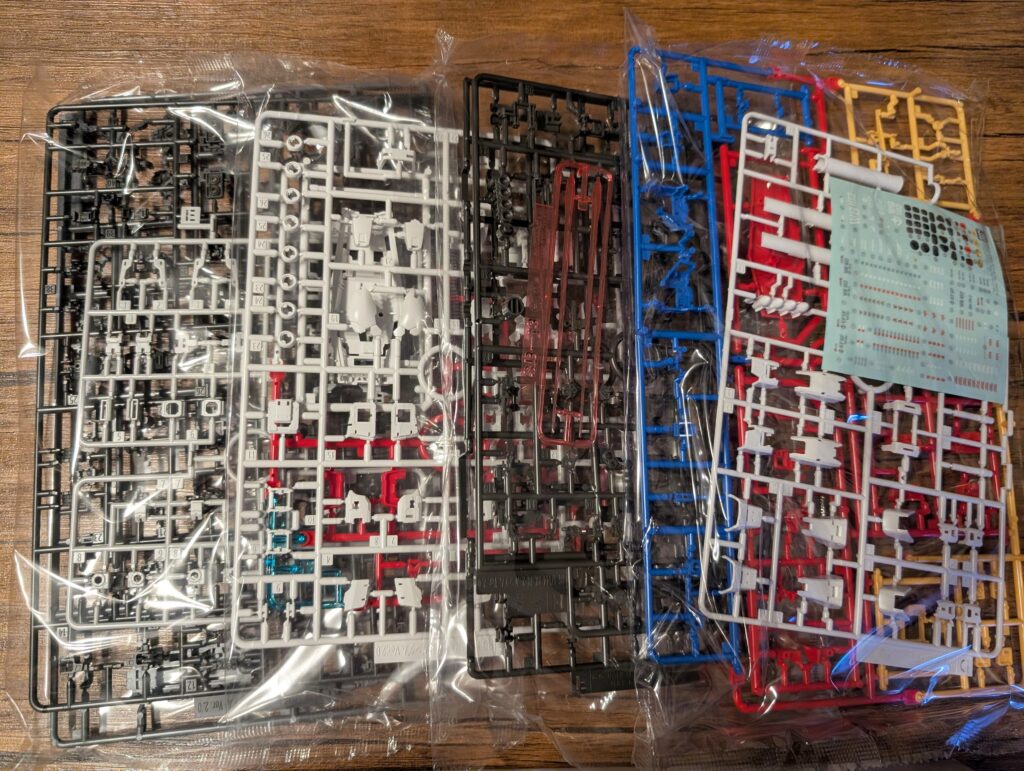
The components included in an RG Gunpla kit consist of multiple runners, an instruction manual, and stickers. These parts together form the basis of the assembly process.
A runner refers to the plastic frame that holds the individual parts used to assemble the Gunpla. The thin connections that link the parts to the runner are called gates. During assembly, these gates are cut using nippers, and the parts are then assembled one by one.
Each runner is produced with color separation already applied, allowing for a highly finished build even without any additional painting. Of course, some builders choose to add extra paint according to their personal preferences. Although RG kits may appear complex at first due to the large number of runners, each runner is labeled with a letter and each part is numbered, making it easy to assemble by following the instruction manual step by step.
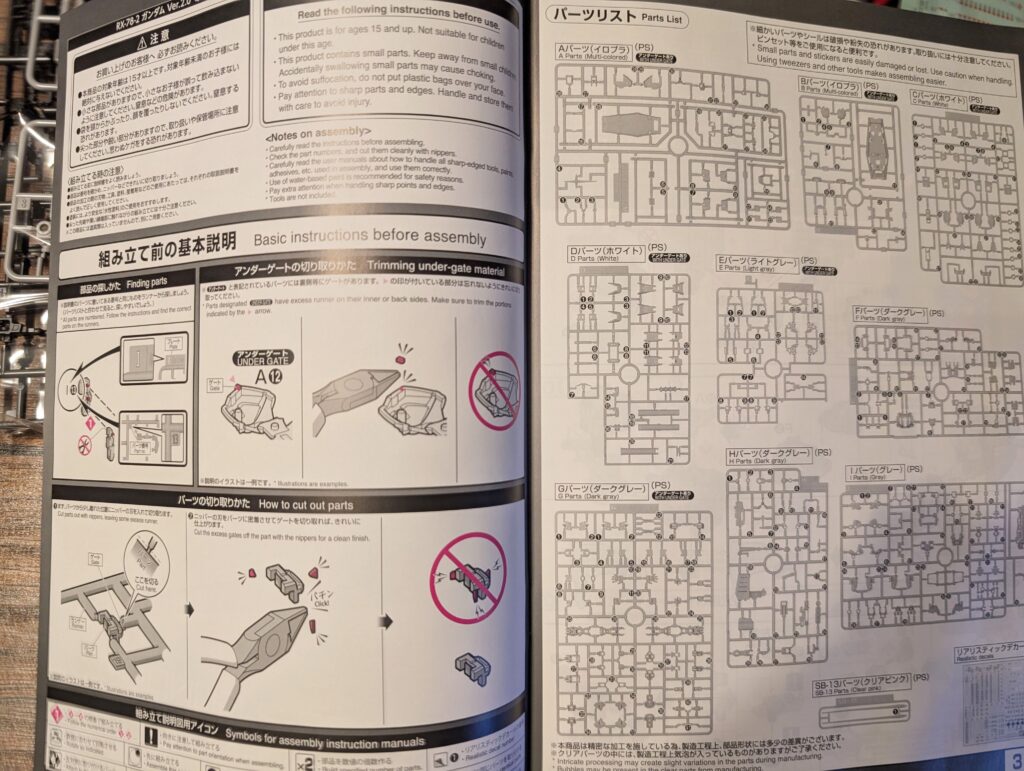
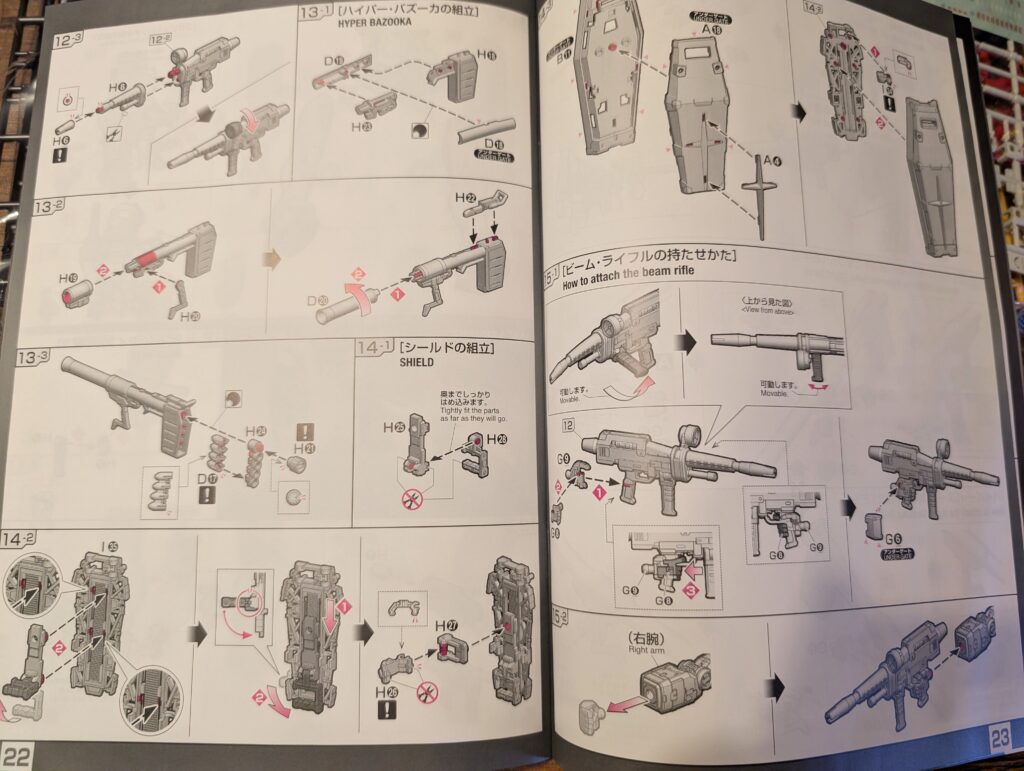
Gunpla instruction manuals are written in both Japanese and English, allowing builders who do not understand Japanese to assemble their kits by following the manual. In addition, the assembly steps are illustrated in a very detailed manner, making it possible to understand much of the process through the diagrams alone.
However, even within a single illustration, the assembly order is often clearly defined, so care must be taken not to change the sequence or skip any steps. If this happens, parts may not fit properly in later stages, which could require disassembling and rebuilding the model. When cutting gates with nippers, extra caution is also needed to avoid accidentally cutting into the parts themselves.
Gunpla Tool Set
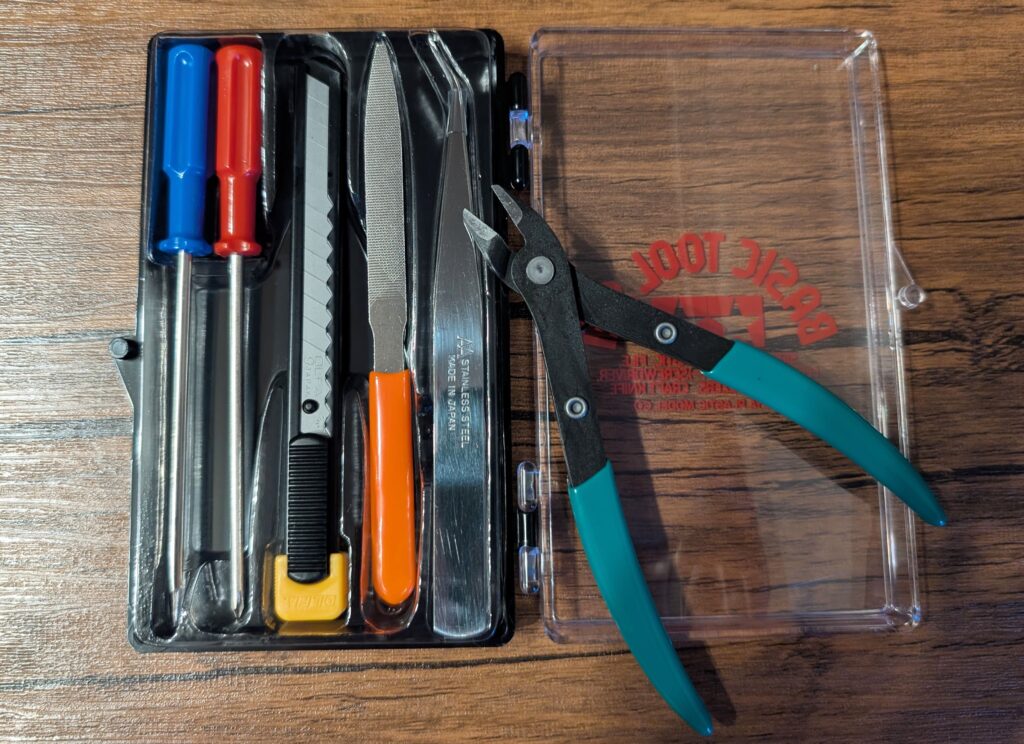
●Nippers
Nippers are the most basic tool used to separate parts from the runner. They play an important role in reducing damage to parts by allowing precise cutting of the gates.
●Tweezers
Tweezers are used to handle small parts or apply stickers. They make it easier to work on delicate areas that are difficult to manage by hand, helping improve the overall finish of the build.
●Sanding Stick
A sanding stick is used to smooth out gate marks and rough areas left after cutting the parts. It helps create a cleaner and more polished appearance once assembly is complete.
●Craft Knife
A craft knife is used to remove fine gate marks that remain after using nippers. Because the blade is sharp, care must be taken to avoid damaging the parts.
●Screwdrivers (Phillips & Flathead)
Screwdrivers are necessary for assembling parts that require screws. Some kits include screw-based assembly, making these tools particularly useful.

Amazon Japan Tamiya Basic Tool Set
Finished RG Gunpla
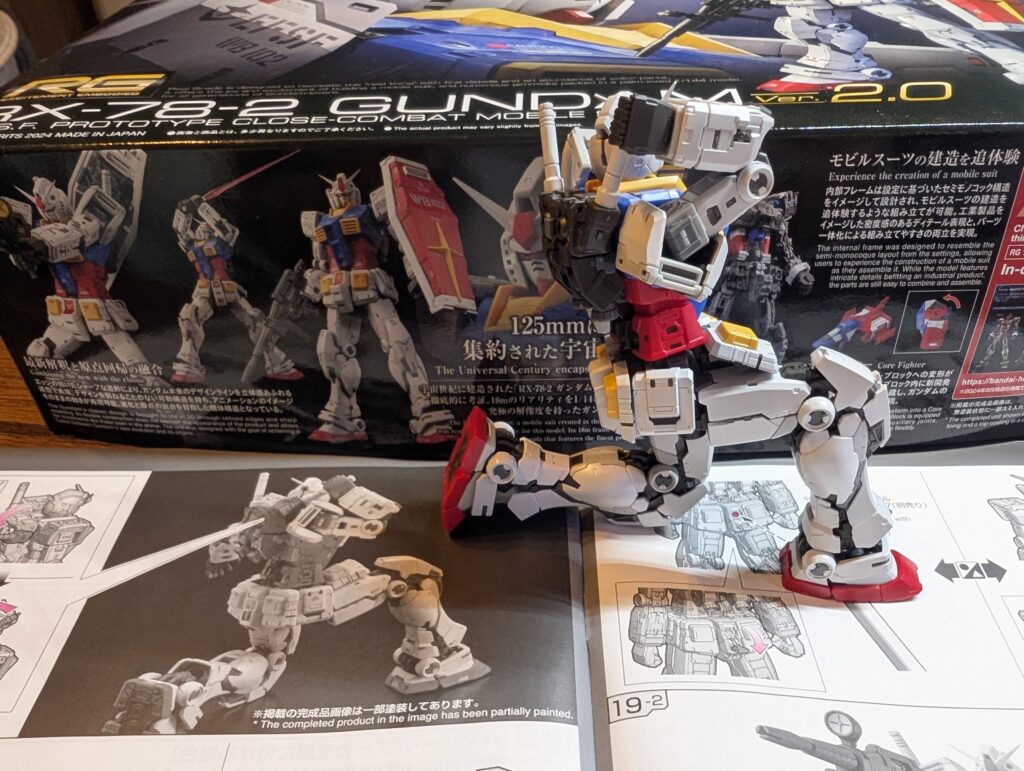
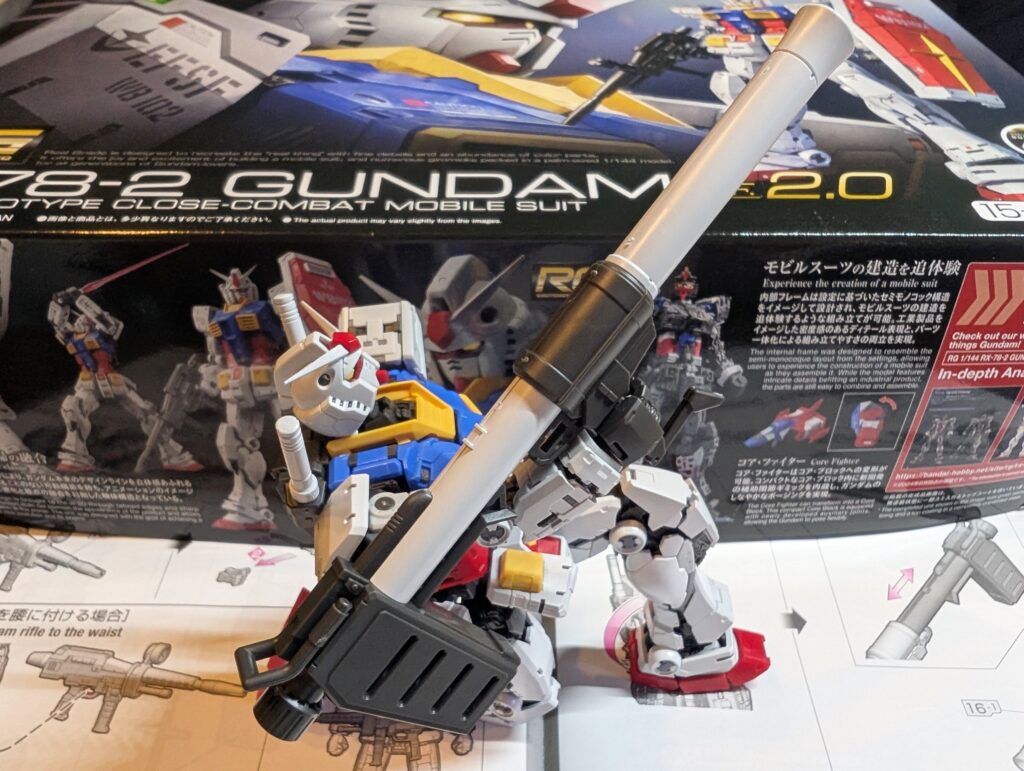
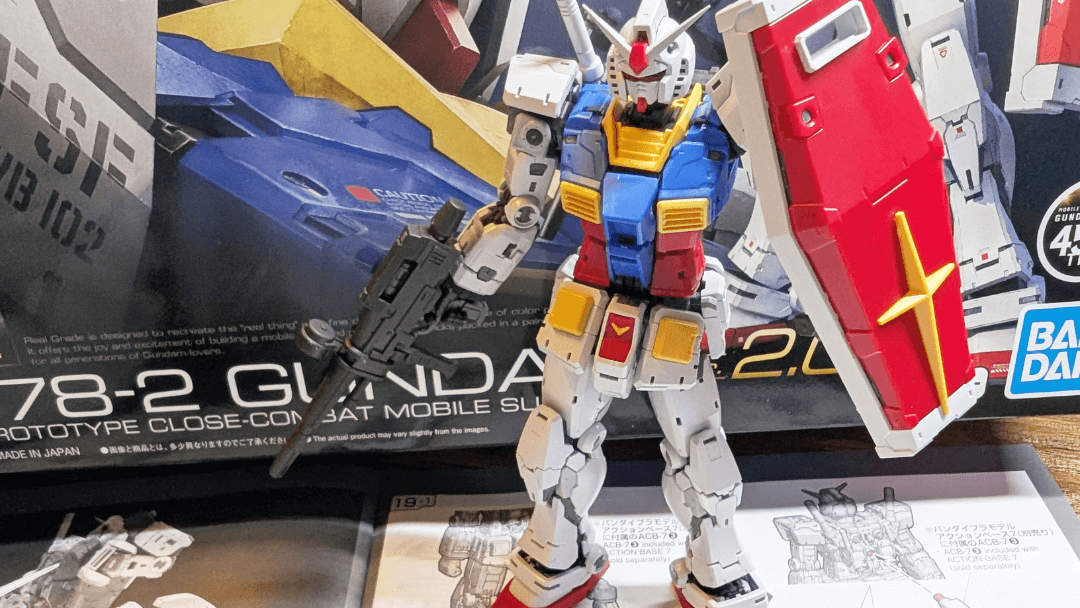
RG Gunpla kits have a relatively large number of parts, so the assembly process can take some time. However, the ability to create very natural and dynamic poses results in a high level of satisfaction once the model is completed.
Compared to MG kits, RG models are generally more affordable and compact enough to display easily on a table or shelf. Since Gunpla is often kept as part of a long-term collection after completion, RG is a grade that can be recommended even to beginners when overall satisfaction is taken into consideration.
On the other hand, for those who prioritize quick completion over the building process, or for those with larger hands who may find small parts difficult to handle, HG or MG grades can also be excellent alternatives.

Amazon Japan RG Mobile Suit Gundam
■Gunpla Official Site



Comments