
✨Stars — Indicate the difficulty level of the book content.
★☆☆ 1 Star: Easy to read and understand.
★★☆ 2 Stars: Moderate difficulty with some specialized terms.
★★★ 3 Stars: Advanced content with complex ideas and terminology.
About the Book
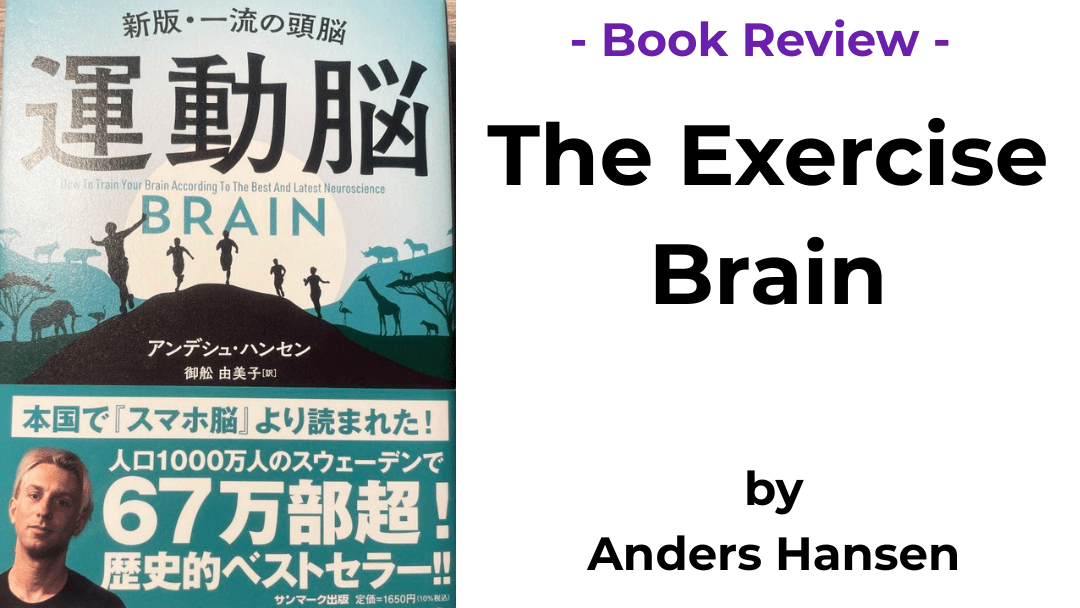
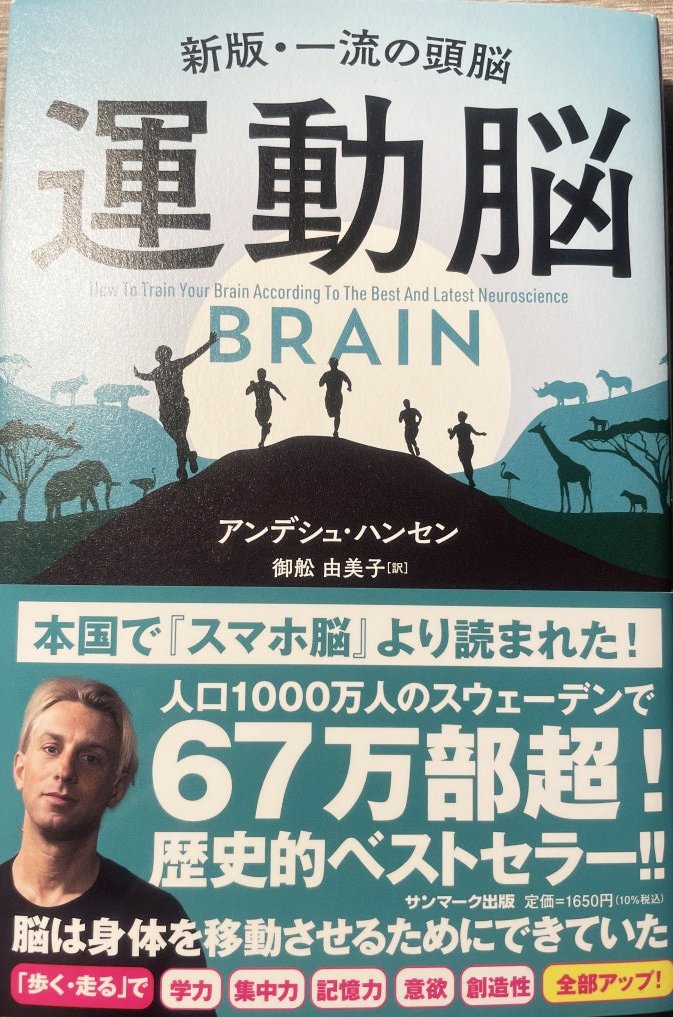
■Title: The Exercise Brain (運動脳)
■Author: Anders Hansen (アンデシュ・ハンセン)
■Publisher: Sunmark Publishing Inc. (サンマーク出版)
The author of this book, Anders Hansen, is a Swedish psychiatrist, a bestselling popular science writer, and also a broadcaster. He is widely known for explaining neuroscience and mental health in a way that is accessible to general readers. Based on his clinical experience and the latest research, he has consistently explored how exercise, stress, and the digital environment affect the human brain.
“The Exercise Brain (The Real Happy Pill)” became a bestseller in Sweden, a country of ten million people, selling over 670,000 copies and being exported to 15 countries worldwide. The book scientifically explains how exercise changes our brain and focuses on the idea that humans originally evolved to keep moving.
He argues that the increasing levels of anxiety, depression, and declining concentration in modern society are deeply connected to a sedentary lifestyle. Presenting research showing that aerobic exercise such as running positively affects memory and emotional regulation, he emphasizes that exercise is the most powerful and almost side-effect-free “treatment for the brain.” He explains that even 30 minutes of light exercise a day can bring meaningful changes to brain function and stress regulation.
Summary
This book begins with the provocative idea that “modern humans are not very different from primitive humans.” The human brain evolved over a long period of time to survive through constant movement, yet today we spend most of our lives sitting. The author explains that stress, anxiety, depression, and declining concentration in modern society are deeply connected to this inactive environment. He emphasizes that exercise is the most effective way to regulate stress hormones and enhance the brain’s resilience.
In the following chapters, he explains the effects of exercise by focusing on functions such as concentration, depression and motivation, memory, creativity, and learning ability. Aerobic exercise stimulates the hippocampus and improves memory, while promoting the release of dopamine and serotonin to enhance mood and motivation. He also states that exercise increases brain plasticity, thereby supporting creativity and learning efficiency.
Finally, the author presents the evolutionary perspective that “the ancestors who moved the most survived,” arguing that exercise should be viewed not as a choice but as a survival strategy. The latter part of the book also includes practical exercise guidelines. Ultimately, the book proposes exercise not merely as health management, but as the most fundamental way to keep the brain in its optimal condition.
Notable Quotes
■運動で脳は「物理的」に変えられる。身体を活発に動かした人の脳は機能が向上し、加齢による悪影響が抑制され、むしろ脳が若返ると判明したのだ。
Exercise can change the brain “physically.” The brains of people who move their bodies actively show improved function, reduced negative effects of aging, and have even been found to become younger.
■人類の歴史を1日に短縮すると、私たちは午後11時40分まで狩猟採集生活を送っていた。デジタル社会、つまりインターネットにつながったのは午後11時59分59秒。生物学的には、私たちの脳と身体は今もサバナにいる。
If the history of humankind were compressed into a single day, we would have lived as hunter-gatherers until 11:40 p.m. We connected to the digital society, that is, the internet, at 11:59:59 p.m. Biologically speaking, our brains and bodies are still on the savanna.
My Thoughts
The great inventor Thomas Edison once said, “The chief function of the body is to carry the brain around.” Anders Hansen’s The Exercise Brain is, among the books on exercise that I have read so far, the one that most convincingly explains why we must exercise. While there are many books that emphasize the importance of physical activity, this book clearly and accessibly explains why exercise is essential from the perspectives of human evolution and neuroscience.
I have worked in an office job for many years and spent most of my day sitting. There were many times when I felt constantly tired and unable to think clearly without any particular reason. Yet whenever I stood up and walked, even briefly, I would soon feel my mind clear. It had only been a vague feeling before, but through this book I was able to understand that change through the principles of neuroscience.
Aerobic exercise goes beyond relieving stress; it improves concentration, alleviates depressive symptoms, enhances memory and creativity, and even promotes the growth of the hippocampus. I was struck by the fact that such remarkable effects can come from relatively simple effort. I had often heard that walking and running are good for physical health, but realizing that they also protect brain health makes me want to go outside and move right away.
– Recommended Reading –


Amazon Japan The Exercise Brain


Comments