
✨Stars — Indicate the difficulty level of the book content.
★☆☆ 1 Star: Easy to read and understand.
★★☆ 2 Stars: Moderate difficulty with some specialized terms.
★★★ 3 Stars: Advanced content with complex ideas and terminology.
About the Book
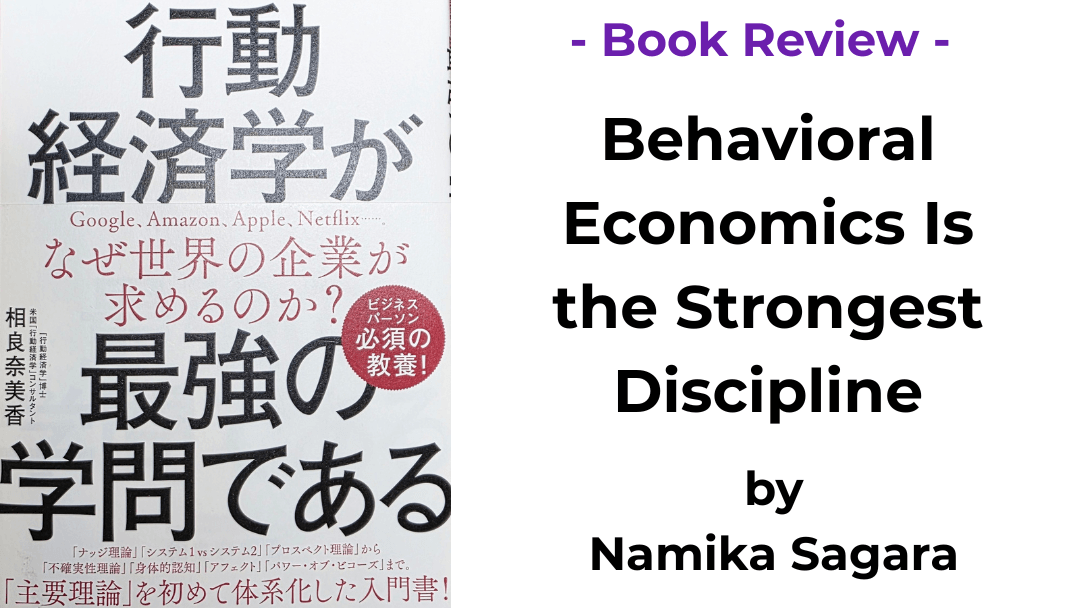
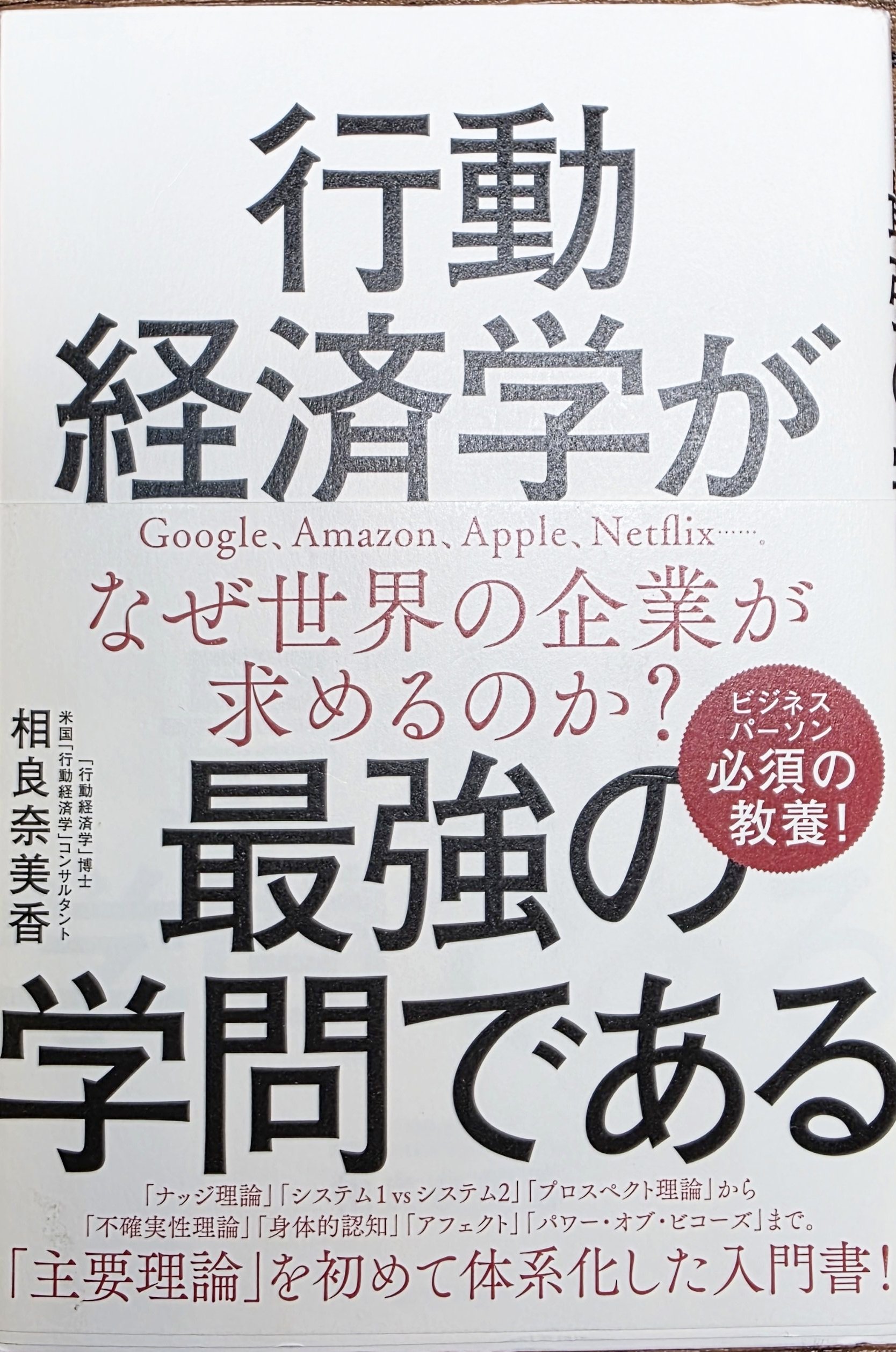
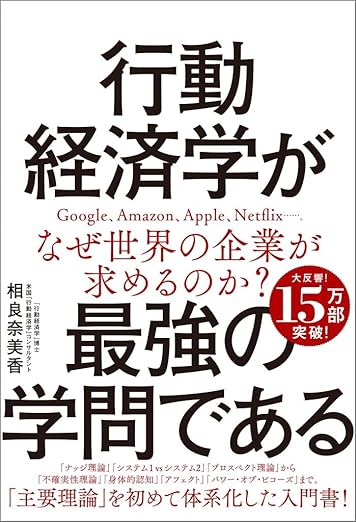
■Title: Behavioral Economics Is the Strongest Discipline (行動経済学が最強の学問である)
■Author: Namika Sagara (相良 奈美香)
■Publisher: SB Creative (SBクリエイティブ)
Behavioral economics is a field that moves beyond the traditional economic assumption that humans always act rationally, and examines how real human psychology, cognitive biases, and emotions influence economic decision-making. Through concepts such as bounded rationality, heuristics, and loss aversion, it explains why people repeatedly make irrational choices. The psychologist Daniel Kahneman, who laid the foundation for this field, was awarded the Nobel Prize in Economic Sciences in 2002 for bringing behavioral economics to the center of economic thought.
As a discipline that explains actual human behavior, the importance of behavioral economics has continued to grow. In recent years, education and research related to behavioral economics have become increasingly active at universities and research institutions. In addition, government agencies and companies have established dedicated teams that apply behavioral economics to policy-making and business practice, such as the United Kingdom’s Behavioural Insights Team. As a result, behavioral economics has become essential practical knowledge for business professionals.
This book is written by a behavioral economics PhD who works as a behavioral economics consultant in the United States. Drawing on extensive research experience and real-world case studies, the author systematically organizes behavioral economics theories, helping readers understand both the theory and its practical applications.
Summary
According to the author, behavioral economics is a field that integrates economics and psychology, and through behavioral economics, it has become possible to explain human behavior in economic activities in a more realistic way. One of the core ideas of behavioral economics is that humans do not always act rationally, and that there are consistent patterns and underlying causes behind such irrational behavior.
This book covers more than 50 major theories of behavioral economics, including nudge theory, System 1 and System 2, mental accounting, and the anchoring effect. These theories are organized into three broad frameworks—cognitive habits, situations, and emotions—and are explained in an easy-to-understand manner using real-life examples from everyday life and business settings.
In the section on cognitive habits, the book explains how the brain’s habitual ways of thinking influence decision-making. The section on situations shows that people’s choices can change depending on the circumstances they are placed in. In addition, the section on emotions examines how a person’s momentary emotional state can lead to irrational thinking and decision-making.
Notable Quotes
■カーネマンは、システム1は直感的で瞬間的な判断であることから「ファスト」、システム2は注意深く考えたり分析したりと時間をかける判断であることから「スロー」と呼びました。「認知のクセ」を生む理論のうち、最も基本となるのがこの「システム1VSシステム2」です。
referred to System 1 as “fast” because it involves intuitive and instantaneous judgments, while he called System 2 “slow” because it requires careful thinking, analysis, and time. Among the theories that explain our “cognitive biases,” the most fundamental is this framework of “System 1 vs. System 2.”
■埋没コストは実は、これまでにつぎ込んだ時間・お金・労力が無駄になるだけではありません。その時間で他にもっと成功につながることができるはずなのに、それができなくなる、つまり機会損失が一番の痛手なのです。
Sunk costs are not simply about the time, money, and effort already invested going to waste. The real loss lies in the opportunity cost—the fact that time which could have been used for something more likely to lead to success can no longer be used in that way, and this missed opportunity is the greatest cost.
My Thoughts
I also found nudge theory to be a very fresh and impactful concept, but what helped me most was being able to understand the many theories of behavioral economics in both a broad and concrete way through this book. Since behavioral economics is a relatively young field, it has not been easy to find books that organize its ideas in a clear and systematic manner. In that sense, this book was especially easy to understand and practical, as it presents the theories in a structured and applicable way.
When it comes to purchasing products, the difference between System 1 and System 2 becomes very clear. There are times when we carefully research and plan before making a purchase, but there are also times when we buy something impulsively simply because we want it at that moment. The book also helped me understand, through behavioral economics, why feelings of depression or accumulated stress can suddenly trigger a strong desire to go shopping.
What resonated with me most on a personal level was the concept of mental accounting in relation to investment profits. I realized that I had tended to spend stock market gains more easily, perceiving them as “money earned easily,” and this became a point of reflection for me. Although I had been vaguely aware of this tendency, understanding the specific theory and underlying reasons led to a change in my behavior. I now consciously avoid spending investment profits, keeping mental accounting firmly in mind.
In this way, while behavioral economics is often discussed in the context of society and corporations, I believe it is also extremely useful knowledge for understanding and improving individual everyday decision-making.
– Recommended Reading –

Amazon Japan Behavioral Economics Is the Strongest Discipline
Comments