
Daifuku (大福)
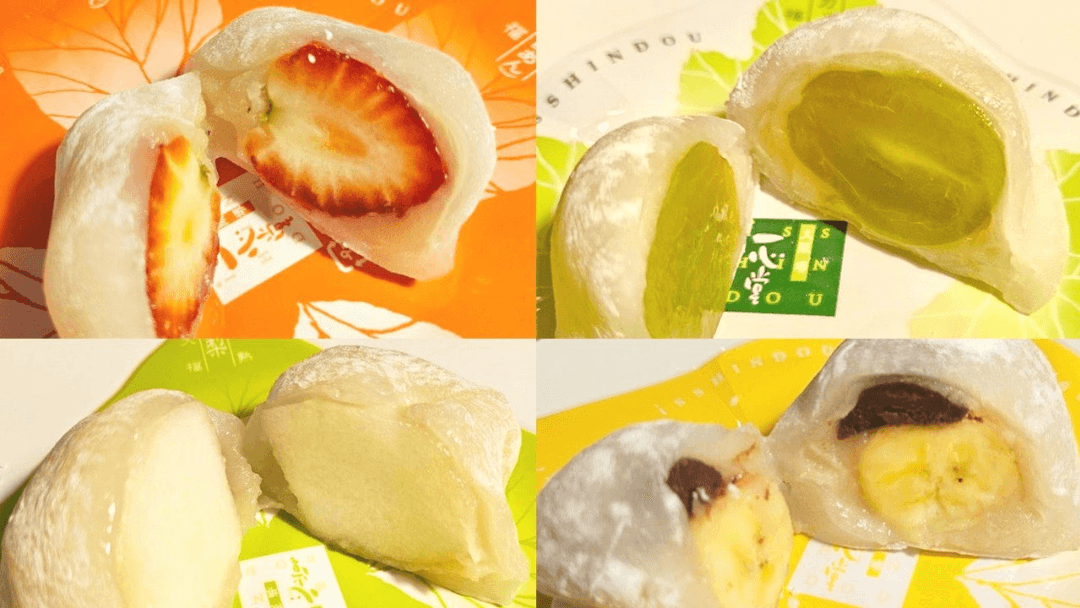
Daifuku (大福), also known as daifuku mochi, is one of Japan”s representative traditional sweets, made by wrapping sweet red bean paste in thinly stretched glutinous rice mochi. Well-known varieties include mame (bean) daifuku, yomogi (mugwort) daifuku, and goma (sesame) daifuku. In recent years, daifuku filled with fruits such as strawberries, mandarins, and grapes have also become popular, and are named according to their fillings, such as ichigo (strawberry) daifuku, mikan (mandarin) daifuku, and budo (grape) daifuku.
It is said to have first appeared during the Edo period. The name is believed to have originally been written as daifuku (大腹), meaning “a full stomach,” and later changed to daifuku (大福), written with characters meaning “great fortune,” to reflect its auspicious connotation.
Daifuku can be easily found not only at traditional wagashi shops but also at department store food sections and local confectionery shops. As it is a type of fresh confection, it has a short shelf life, so it is best enjoyed as soon as possible after purchase.
Isshindo (一心堂)
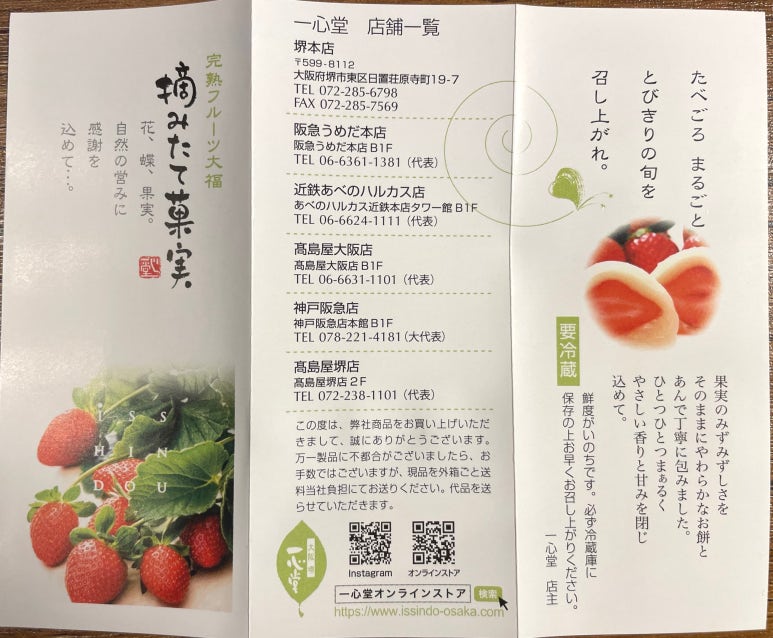
Isshindo is a traditional local wagashi shop founded in 1952, best known for its ichigo daifuku filled with a whole large strawberry. Made with carefully selected domestic strawberries and Tamba-grown red beans, the daifuku are said to be handcrafted one by one every morning by skilled artisans.
Since its founding, Isshindo has followed the motto of “bringing wagashi that allow customers to enjoy the changing seasons,” using traditional ingredients passed down through generations to create sweets that highlight the natural flavors of each ingredient.
Isshindo has its main shop in Sakai, Osaka Prefecture, and operates stores mainly in department stores, including Hankyu Umeda, Kobe Hankyu, Kintetsu Abeno Harukas, Takashimaya Osaka, and Takashimaya Sakai.
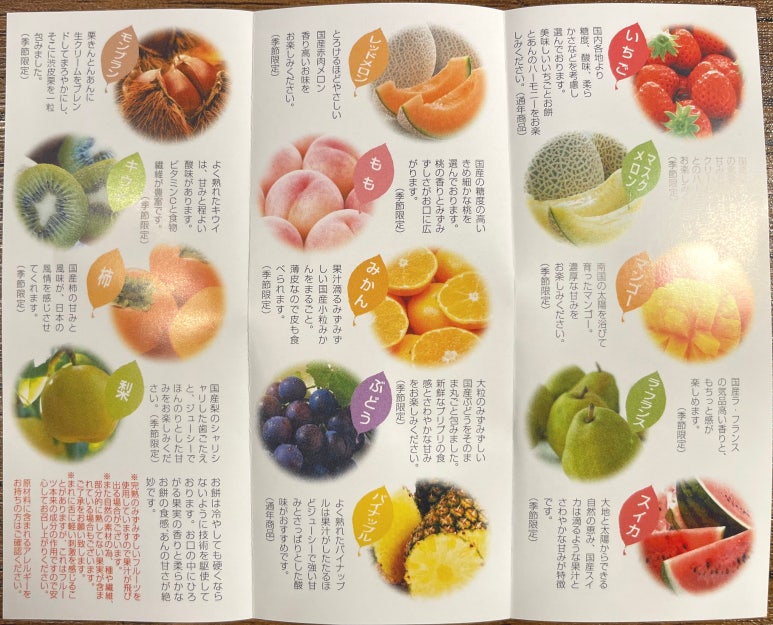
Strawberries and pineapples, which represent Isshindo, are available year-round. In addition, the shop offers a variety of seasonal fruit daifuku for a limited time, including muskmelon and mango, summer favorites such as watermelon, high-sugar domestic peaches, refreshing mandarins, large single grapes, as well as kiwi and pear.
By using carefully selected fruits at their peak season, Isshindo’s daifuku allows customers to enjoy not only the taste but also the changing seasons in the most delicious way, in line with the shop’s motto.
Isshindo Daifuku
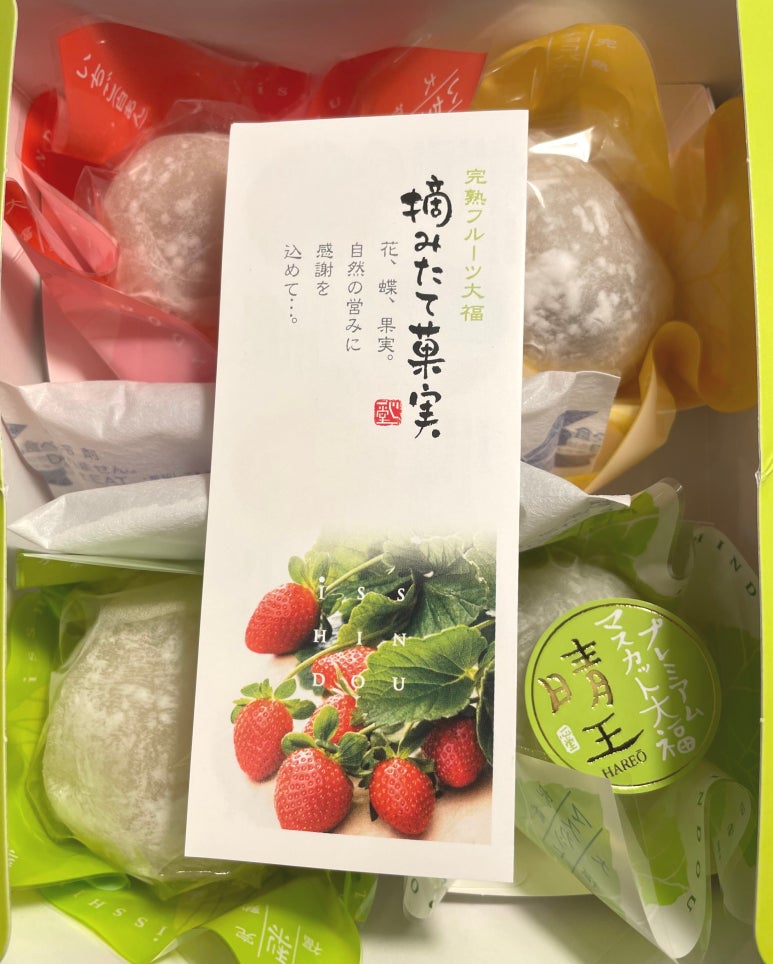
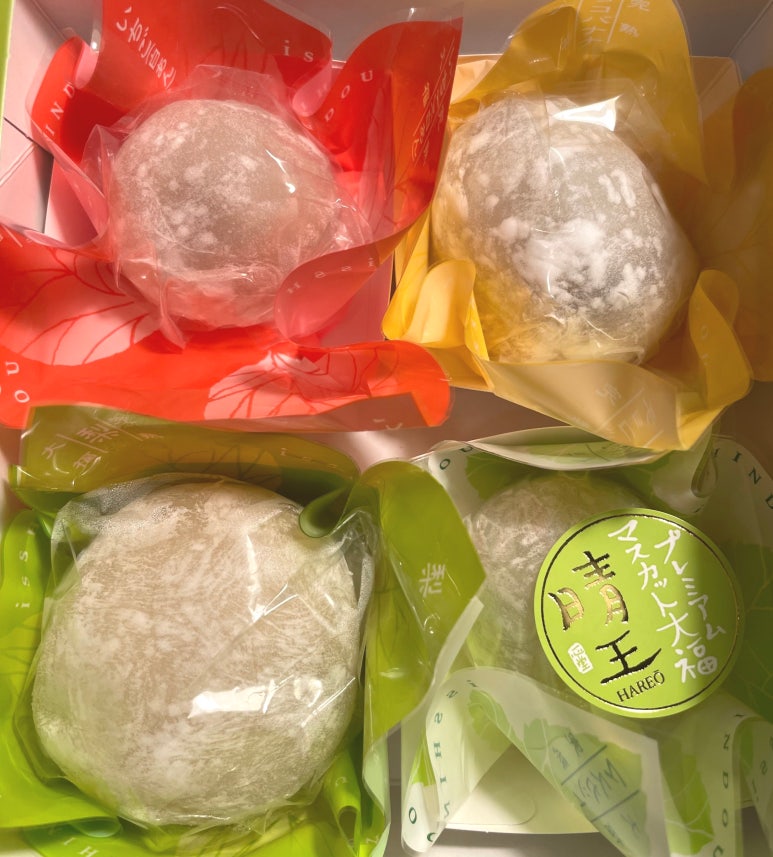
I visit Hankyu Umeda quite often, and whenever I do, I sometimes stop by Isshindo to buy daifuku. Although a wide variety of fruit daifuku are on display, I especially like Isshindo’s signature strawberry daifuku and tend to buy it frequently.
This time, in addition to the strawberry daifuku, I also purchased chocolate banana, pear, and a muscat daifuku called Hareo. Trying and comparing different kinds of fruit daifuku made it enjoyable, and being able to casually enjoy the flavors of seasonal fruit is one of the reasons I keep coming back.
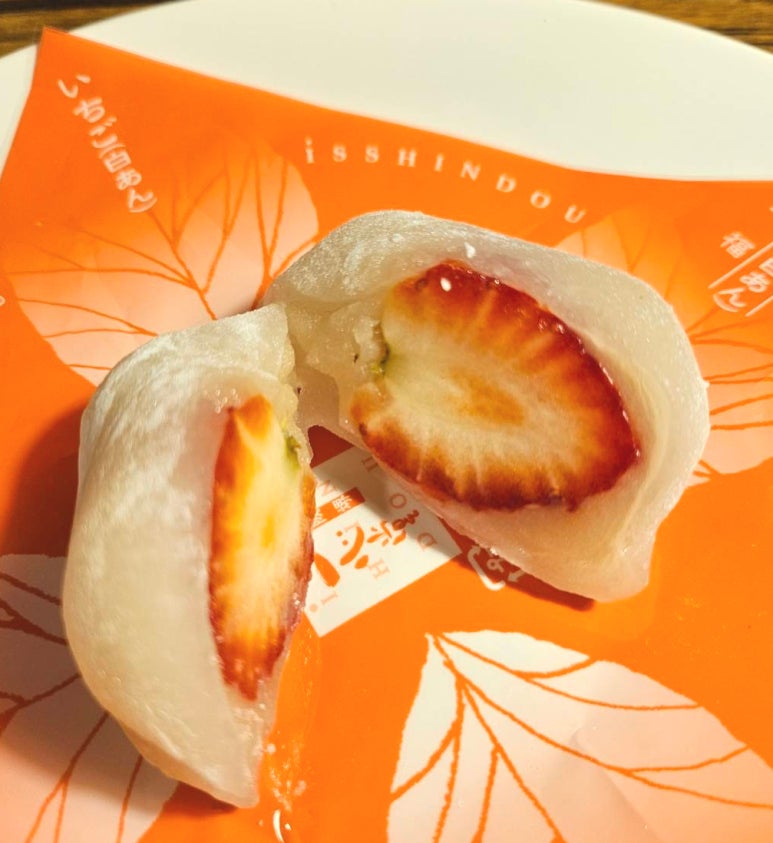
●Ichigo (Strawberry) Daifuku
This is Isshindo’s signature ichigo (strawberry) shiro-an daifuku. The mochi that wraps the fruit in Isshindo’s fruit daifuku is soft with a gentle sweetness, and the strawberry inside is even sweeter, blending naturally in the mouth from the first bite.
In particular, the clean and mild sweetness of the white bean paste enhances the freshness of the strawberry without overpowering it, creating a well-balanced flavor overall. The harmony between the mochi, the bean paste, and the fruit is what makes Isshindo’s ichigo daifuku especially appealing.
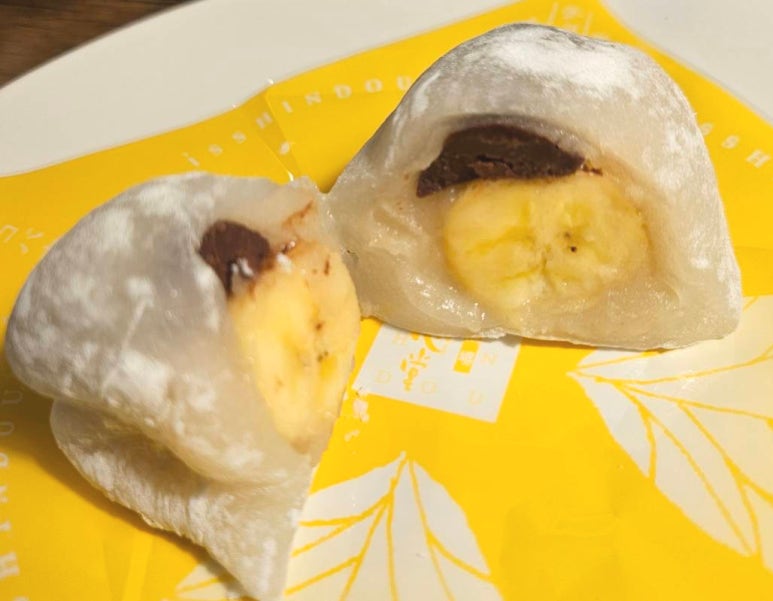
●Choco Banana (Chocolate Banana) Daifuku
The chocolate banana daifuku was a combination I had never seen at Isshindo before, so I decided to try it out of curiosity. Since it contained both chocolate and fruit, I initially worried that it might be overly sweet. However, once I tried it, I found that the sweetness was well balanced, allowing me to enjoy a classic chocolate banana flavor with a harmonious blend of chocolate and banana.
I usually choose daifuku filled only with fruit, but the addition of chocolate gave it a different and refreshing impression. It made me think that this kind of combination can be a nice change from time to time.
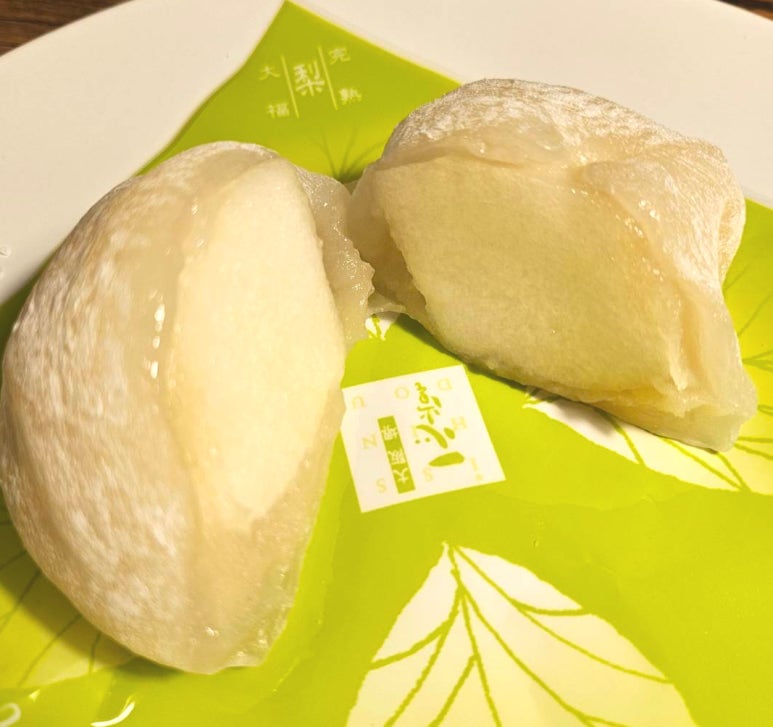
●Nashi (Pear) Daifuku
I enjoy most fruits, but pears are a particular favorite of mine, to the point that I make sure to buy them every autumn. Isshindo’s pear daifuku left a strong impression with the contrast between the crisp pear and the soft, chewy mochi. Beyond the texture, the flavor was surprisingly sweet, with the rich natural sweetness of the pear filling the mouth.
Finding truly sweet and flavorful pears is not easy every year, but perhaps because Isshindo carefully selects its fruit, the quality of the pear itself was evident with every bite. As I continued to chew, the taste of an autumn pear at its peak came through, making it feel as though I was enjoying the season itself through a single daifuku.
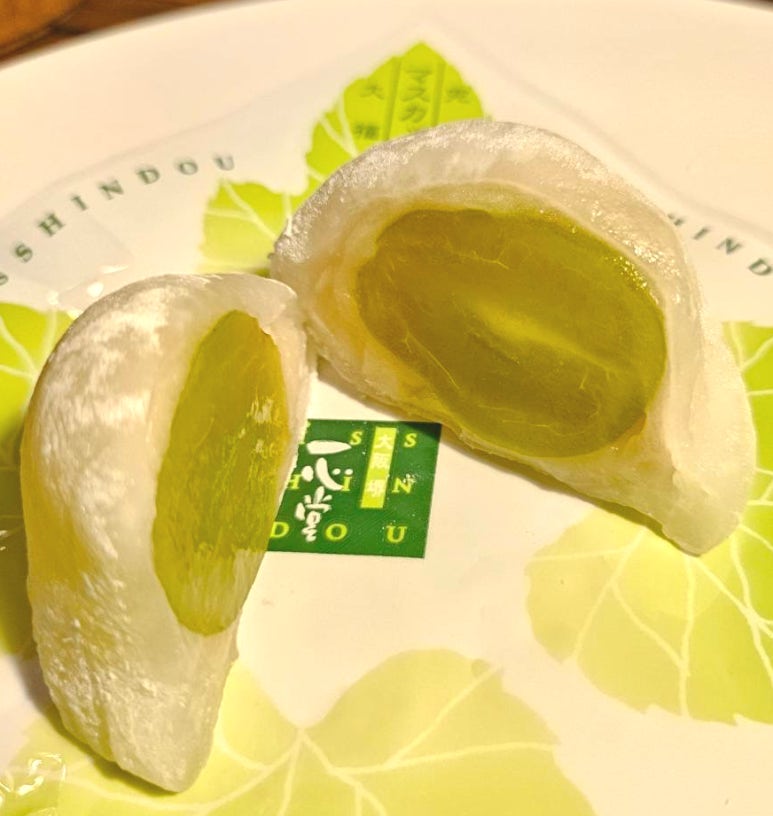
●Masukatto (Muscat) Daifuku
This is a muscat daifuku made with Shine Muscat branded as Hareo (晴王). To be honest, I had never heard the name Hareo before, but the fact that it carries a specific brand name gave me a sense of trust, as it suggests guaranteed sweetness and freshness of the fruit.
While many fruit daifuku tend to focus mainly on sweetness, this muscat daifuku offered a well-balanced combination of the muscat’s refreshing acidity and the gentle sweetness of the mochi. It works perfectly both as a first fruit daifuku to try and as a refreshing final piece to finish with.
Isshindo Daifuku Prices
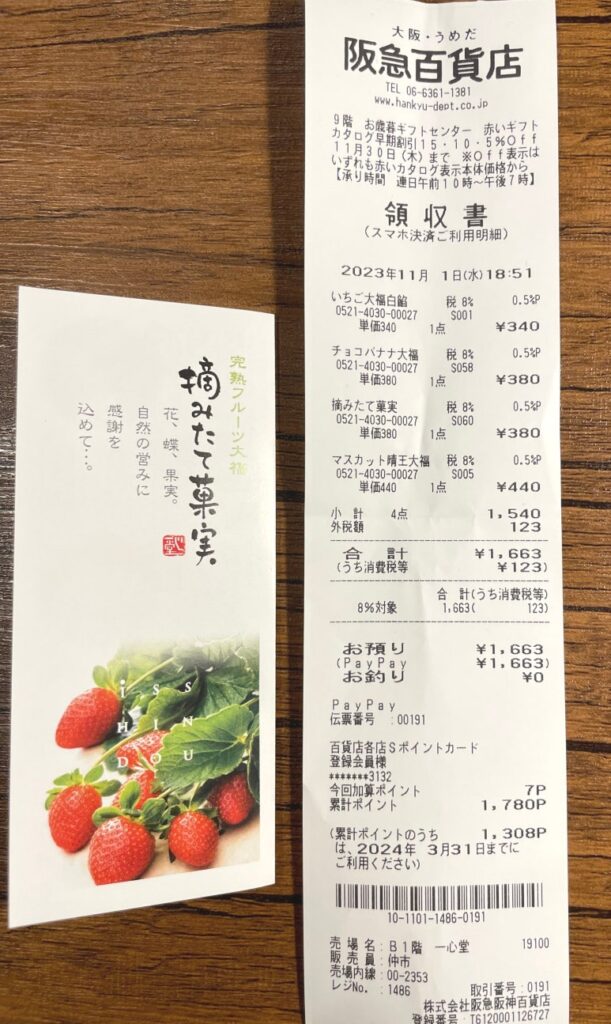
As of the purchase date, the price of daifuku at Isshindo, a Japanese wagashi specialty shop, is generally around 400 yen per piece. Some limited-time varieties are priced at around 600 yen, but considering the sense of satisfaction and enjoyment that comes with eating Isshindo’s daifuku, it never feels expensive.
I have tried many fruit daifuku in Japan, but Isshindo is the only shop I continue to return to and repurchase from. I highly recommend experiencing the seasons in Japan through Isshindo’s fruit daifuku.
– Recommended Reading –
■Isshindo


Comments