
✨Stars — Indicate the difficulty level of the book content.
★☆☆ 1 Star: Easy to read and understand.
★★☆ 2 Stars: Moderate difficulty with some specialized terms.
★★★ 3 Stars: Advanced content with complex ideas and terminology.
About the Book
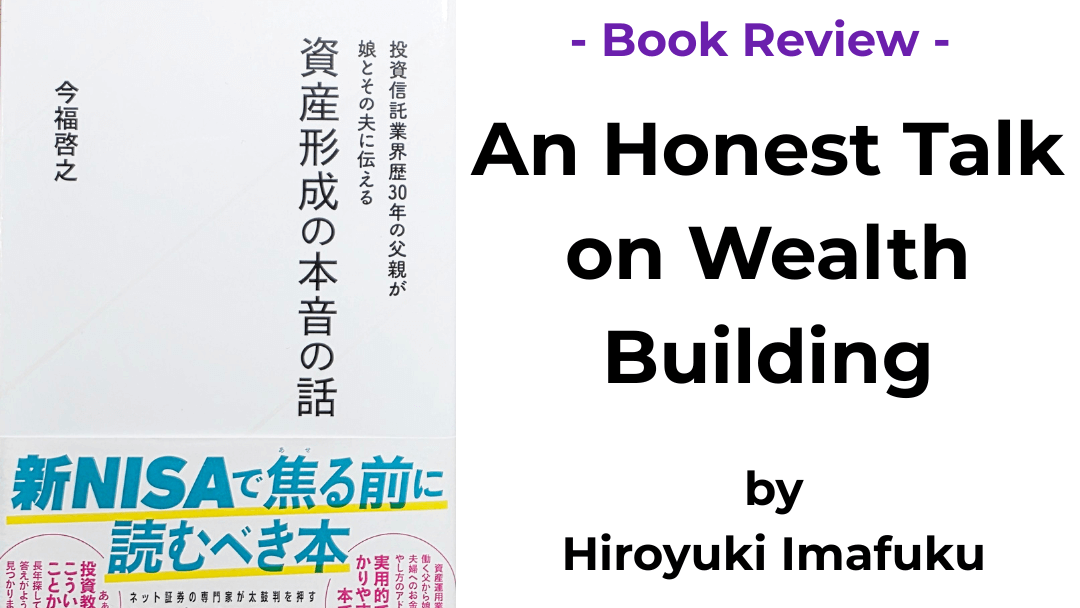
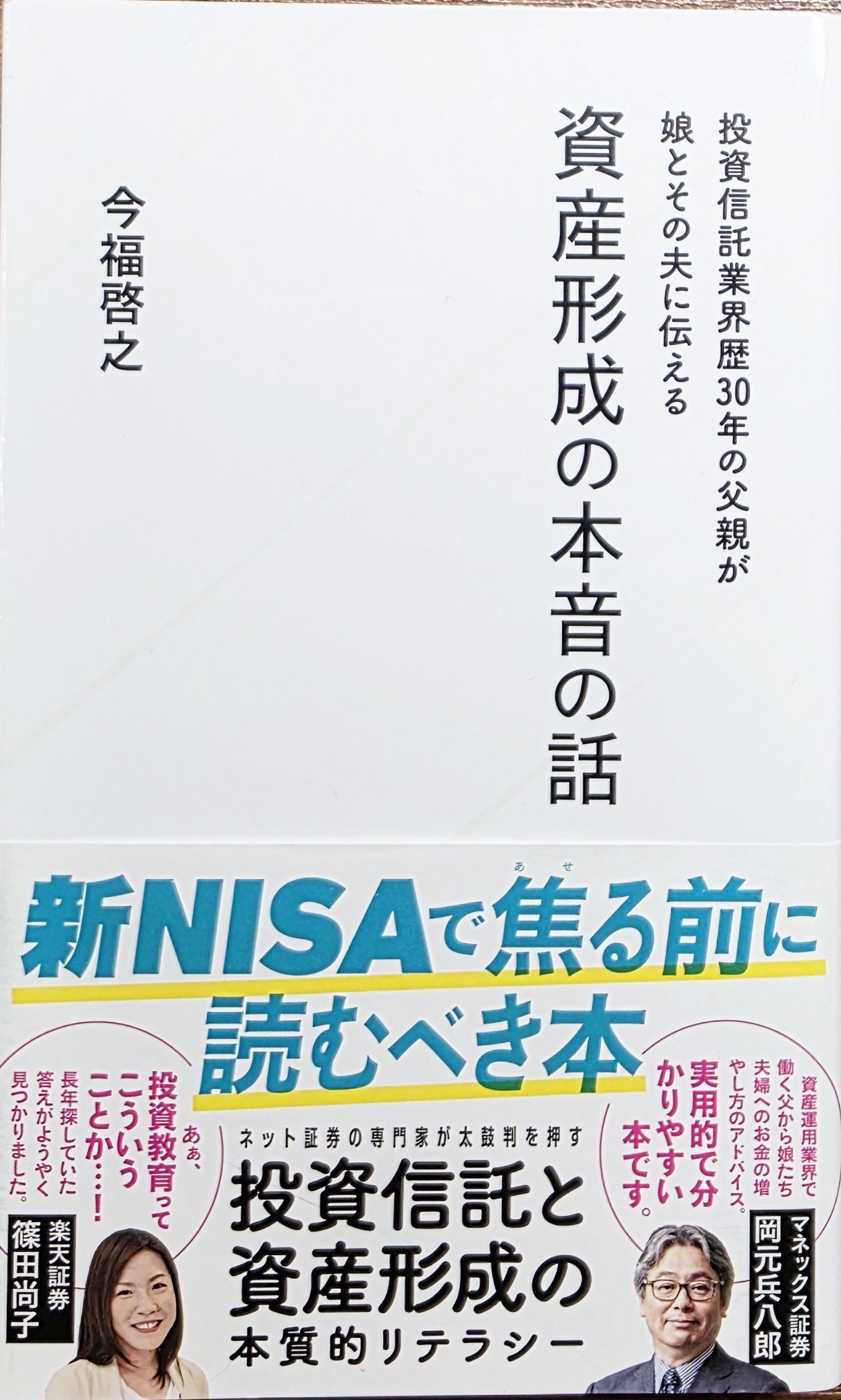
■Title: An Honest Talk on Wealth Building from a Father with 30 Years in the Investment Trust Industry to His Daughter and Son-in-Law (投資信託業界歴30年の父親が娘とその夫に伝える資産形成の本音の話)
■Author: Hiroyuki Imafuku (今福 啓之)
■Publisher: Kodansha (講談社)
The author began his career in the financial industry in 1990 when he joined Nomura Securities and has worked in the field for over 30 years. During that time, he started publishing articles on a website to share the mindset and basic knowledge about asset building that he truly wanted to pass on to his two daughters, who were in their twenties at the time, and to their husbands.
These articles were serialized under the title “The Golden Rules of Asset Building for My Two Daughters and Their Husbands” and consisted of a total of 32 installments. This book is a carefully compiled volume based on those writings, published under the title “An Honest Talk on Wealth Building from a Father with 30 Years in the Investment Trust Industry to His Daughter and Son-in-Law.”
The book is written in a tone that feels as though the author is speaking directly to his daughters and sons-in-law. Rather than focusing on short-term profits or goals, it calmly explains how one should view and manage assets from a long-term perspective, especially in the early stages of life. Essential financial knowledge and terminology are explained in a clear and accessible way, making the book easy to read even for beginners who are just starting to think about asset building.
In particular, drawing on the author’s long experience and expertise in Japan’s financial industry, the book offers financial information and ways of thinking that are closely connected to everyday life, which can be especially helpful for managing assets while living in Japan over the long term.
Summary
As the title suggests, this book is structured with newly married couples in particular as its primary intended audience. From the opening section, the author clearly states that the expectation that significant results will appear immediately simply because one has started asset management is misguided. Instead, he emphasizes the importance of managing assets together as a couple, while referring to his own approximately 20 years of investment experience as a point of reference. Notably, the book does not focus solely on positive outcomes, but also addresses failures and negative experiences, which contributes to the overall credibility of the content.
The book covers a wide range of essential terms related to asset building, including the calculation of net asset value, cost structures such as trust fees, the concepts of accounts and stock prices, the effects of compound interest in investing, long-term investment, pensions, funds, and NISA. For each concept, the author provides not only definitions of technical terms but also concrete examples, and logically explains commonly misunderstood points along with the reasons behind them. As a result, the book broadly addresses the fundamental concepts, structures, and ways of thinking necessary for asset building as a whole, rather than focusing on specific investment products.
Notable Quotes
■君たちの会社の社長だって、「今年の我が社の目標は現状維持です。頑張らなくていいです」なんて言わないよね。
企業は毎年売り上げや利益を増やしていこうとするし、僕らは去年よりも給料が上がってほしいと頑張る。こういうことの集まりが経済だから、やっぱり全体としては右肩上がりで、だから株式市場も右肩上がりなんだよね。
You know, even the president of your company wouldn’t say, “This year, our goal is just to stay the same. You don’t really have to try.”
Companies always want to grow their sales and profits every year, and we work hoping our pay will be a little higher than last year. All of that adds up to what we call the economy. That’s why, when you look at it as a whole, things tend to move upward over time. The stock market works the same way.
■君たちにとってのそれは、20年、30年後に「人生のハンドル」を自分たちが握っている実感を持った、余裕ある大人になっていることだと思う。
つまり、君たちにとっての「真のリスク」とは「その夢が叶ってないまま20年後30年後を迎えていること」じゃないだろうか。
For you, I think that means becoming adults who, 20 or 30 years from now, truly feel that you are holding the “handle of life” in your own hands, with a sense of ease and composure.
In other words, for you, the “true risk” may be “reaching 20 or 30 years in the future while that dream has not come true.”
My Thoughts
What surprised me most was that, right from the beginning of the book, the author clearly states that simply starting asset management does not mean that something dramatic will immediately happen. While many finance, economics, or asset management books I have read tend to emphasize that starting to invest will lead to significant profits in the future, this author instead stresses from the outset that readers should not have excessive expectations. Since I myself felt very optimistic and hopeful when I first started investing, this honesty made the book feel especially trustworthy to me.
Another point that stood out was the author’s perspective that asset management ultimately involves a large element of “luck.” Advice such as investing long-term in stable companies with strong growth potential is common, but I had rarely encountered a book that so clearly stated that the economic and investment environment over one’s investment period cannot be controlled by the individual, and that outcomes are therefore heavily influenced by luck. At the same time, the author also explains that because the economy is made up of companies and individuals constantly striving to generate profits, it has a structure that tends to move upward over the long term. This combination made it easier to understand both the advantages and limitations in a balanced way.
Finally, the author’s message that the true risk in asset management is whether or not you are still living as the owner of your own life 20 or 30 years from now felt less like advice from a financial professional and more like heartfelt words from a father speaking sincerely to his beloved daughters. For those living long-term in Japan, as well as young professionals, beginners who are just starting to invest, and especially newly married couples, this book strikes me as highly realistic and practical.
– Recommended Reading –


Amazon Japan An Honest Talk on Wealth Building
Comments